• Menu
  • Skip to primary navigation
  • Skip to secondary navigation
  • Skip to main content
  • Skip to footer

Straton Electrical

Electricians in Gqeberha (Port Elizabeth)

  • Home
  • About
    • Automation
    • Electrical
    • Energy Performance Certificates
    • Plumbing
    • Projects
    • Prepaid
    • Reach
    • Solar
    • Straton Water Monitor
  • Tips
  • News
  • Contact
  • Shop
  • Newsletter
  • Loyalty
    • Free Loyalty App
  • FAQ’s
  • BA Systems
  • Mbane
  • Reach Trust
  • Stratlec Shop
  • Straton Electrical
  • Straton Prepaid
  • Straton Solar
  • Home
  • About
    • Automation
    • Electrical
    • Energy Performance Certificates
    • Plumbing
    • Projects
    • Prepaid
    • Reach
    • Solar
    • Straton Water Monitor
  • Tips
  • News
  • Contact
  • Shop
  • Newsletter
  • Loyalty
    • Free Loyalty App
  • FAQ’s

Alan

Electricity Saving Tip – Heaters

16 February 2021 By //  by Alan

What Type of Heater is cheapest to run? Infrared Type Heaters.

Infrared heaters provide exceptionally efficient room heating using radiation – heating people, objects and surfaces directly without wasting energy warming the air.

The cost of a heater is an important consideration in the selection process. There are two cost components to bear in mind: the purchase price and the cost of running the heater. The purchase price is an easy, direct comparison. Running costs depend on the type and cost of the fuel source and the efficiency with which the heater turns this fuel source into useful heat.

In South Africa, we mainly make use of electricity or gas as fuel sources for heaters. The benefit of gas is that it provides instant heat and is available when electricity supply (loadshedding) is a concern. The downside is, however, that gas in South Africa is considerably more expensive than electricity (despite recent electricity price hikes). Almost all electrical heater options are significantly more economical than gas heaters.

Decide what type of heat you need – quick and warm (convection type heaters) for people staying in a room for short periods of time will be more expensive than slow and warm (wall panel type heaters) for bedrooms.

Infrared heaters are more electricity efficient than other space heating systems. These types of heaters can be used both for spot heating and area heating. They transfer energy directly by radiation, creating heat and comfort instantly without the use of air-circulation fans. An infrared heater will warm the people in the room rather than the space. Infra-red heaters often use metal-sheated infrared radiation elements, reflector lamps or quartz tubes.

The oil filled heater is the safest type of heater for the bedroom. A thermostat control switches the unit on and off as required, but to save energy, only use on the lowest comfortable setting.

Electric blankets consume little electricity. However, the correct method of use is to switch them on to the highest setting and warm the bed just before climbing in – then switch them off.

Close doors and windows when using a heater.

Go further and save more with: Building Automation Systems / Solar PV Installations / Metering Solutions.
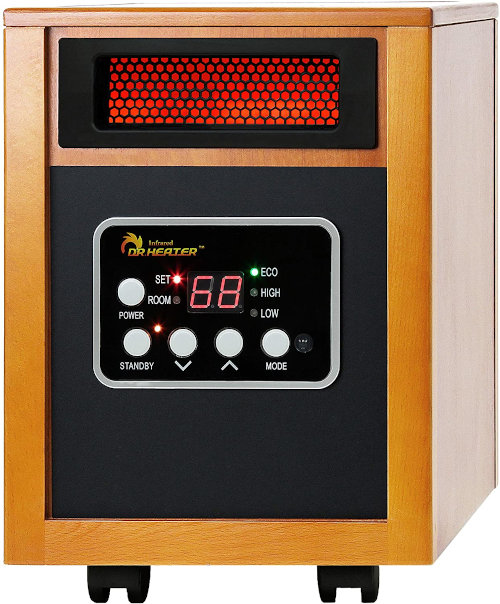
Dr Infrared Space Heater
Dr Infrared Space Heater (or is it a boom box?)

It is important to give some thought to how you are likely to use the heater and select the best type for your application. Consider the cost of running the heater in your preferred way. Also bear in mind the safety of open elements, gas leaks, etc. Whichever option you select, be sure to start with no cost or lowest cost warming options first. Dress warmly, make sure curtains are drawn, windows and doors are closed, and openings are sealed. Ceiling insulation is generally a good option to save heating costs. Hot water bottles and electric blankets are other alternatives available for localized warmth at low costs. And remember don’t ramp up the heat too quickly. Hot and stuffy rooms require ventilation which leads to wasted energy and unnecessary costs!

Wall panel heaters have amongst the lowest running costs. These heaters are suitable for heating rooms of up to 12m2. They are easy to install on a wall. However, they use a low wattage so the heat they provide will be less than a gas heater or fin heater, for example. And they aren’t portable.

Most models of infrared heaters have cool-to-touch exteriors and are safe to use with young children and pets in the home. Though clearances are not as much of an issue as with hot-coil heaters, you should remove clutter in the heater’s area to ensure that heat can freely be dispersed to the room. As with any electrical heaters, keep papers, clothing, magazines, and other similar items away from the heater.

Infrared heaters are designed to be room, zone, or space heaters.

The overall efficiency of the infrared heaters depends greatly on how the unit is engineered, constructed, and how much it’s being used in coordination with other heat sources in your home.

There are three models of electric infrared heaters: portable wheeled units with infrared heating technology, compact heaters with (partial) infrared capability combined with other forms of heating systems, and freestanding electric infrared fireplaces.

Bonus Electricity Saving Tip – Insulation

In parts of South Africa, during winter, the heating of rooms is one of the largest sources of electricity consumption in a home. Improving a home’s thermal insulation can save hundreds of Rands a year in space heating costs and improve the home’s comfort.

Insulate The Ceiling:

Insulating the ceiling helps make a home a comfortable electricity efficient place. As much as 50% of heat losses in a house can be attributed to a lack of ceilings and ceiling insulation. If a home’s ceiling is well insulated, heating and cooling expenses can be kept low. The effectiveness of ceiling insulation depends on the type of material from which it is made, its thickness and its density.

Ceiling insulation in SA varies from fibreglass insulation to a type of insulation prepared from a mixture of paper and other materials. The latter is blown into the ceiling, sealing the total roof area. Any of the methods are equally effective and the supplier of these insulation’s will be able to offer reliable information about ceiling insulation.
Filed Under: Tips

Electricity Saving Tip – Iron

16 February 2021 By //  by Alan

The One Small Appliance Most Hated by National Servicemen? The Iron!

Those soldiers will take cold comfort in knowing that the modern day iron has its roots in ancient history. Circa 400 B.C., Greeks would heat a round bar – known as a goffering iron – and use it to produce pleats on robes.

An iron consumes as much energy as ten 100 watt light bulbs. Several steps can be taken to increase ironing efficiency:

  • Iron low temperature fabrics first to reduce warm up time.
  • Iron large batches of clothing at one time to avoid wasting energy reheating the iron several times.
  • Switch your iron off before you are finished and complete the ironing on stored energy.
  • Prevent scorching and wasting energy by not over heating the iron.
  • Use only distilled water in steam irons.
  • Be sure to turn your iron off if you are interrupted whilst ironing.
  • Use the permanent press feature on your washer and dryer if it is available.
  • By removing clothing promptly from the dryer and folding them carefully, many items will require no ironing, or just a quick press.

Go further and save more with: Building Automation Systems / Solar PV Installations / Metering Solutions.

What modern consumers would identify as an iron first appeared in Europe in the 1300s. Called a flatiron it was simply a smooth piece of metal affixed to a handle. The iron would be heated over flames until sufficiently hot, at which time it would be picked up with an insulated glove. A layer of cloth would cover the article of clothing to prevent soot from the iron from staining the finished garment. Once the flatiron cooled, it would be reheated and the process repeated. Besides smoothing wrinkles, ironing served another important function, killing germs in clothing and reducing mildew.

Metal technology began developing in the 1800s, hastening the evolution of the smoothing iron. Flatirons could be heated atop cast iron stoves, making the job much easier and cleaner than fire. By 1870, wooden handles were used, preventing users from receiving burns, as wood is an insulator.

Gas irons were patented in the 1870s, making the devices even easier to use. A gas line would carry fuel to the appliance, which contained a burner to provide the heat.

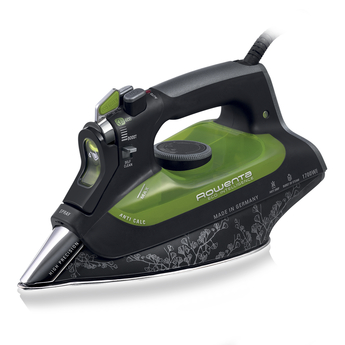
Rowenta Eco Intelligence Steam Iron

The invention of the electric iron coincided with the widespread electrification of American homes in the 1880s. In 1882, Henry W. Seeley of New York City received a patent for the electric flatiron. His model had built-in coils and was heated on a rack. The problem was that it took a long time to heat and cooled rapidly once in use.

Perhaps the biggest breakthrough in smoothing-iron technology occurred early in the 20th century, when irons were made with electric cords. The development helped solve the centuries-old necessity of constantly reheating the iron. Improvements also were made to the sole plate (bottom) of the iron and by the 1920s, many irons came equipped with thermostats to control the level of heat.

In the mid-1920s, the Eldec Company unveiled the steam iron, which facilitated the pressing of dry material. Up to that point, users had to sprinkle water on the fabric. The steam irons funneled water vapor from a receptacle to small holes on the sole plate.

Other improvements in the following decades included the development of an aluminum sole plate that would not rust. In the 1950s, irons capable of both wet and dry operation were introduced, and in 1995, most sole plates had nonstick coating.

Improvements on the sole plate have resulted in more efficient and energy savings. Improved coatings make it less susceptible to scratches from zippers or buttons on garments.

In 2012 Rowenta announced the Eco Intelligence Iron with a new patented Microsteam400 3De soleplate (Patent US no. 7,305,780). Apparently the soleplate is the crux of the energy-efficient design – helping to concentrate steam on the fabric, reducing loss of steam and therefore saving on water usage. The iron is claimed to reduce energy usage by 25%. At a price of around $170.00 (shipping and taxes included) one would have to iron a lot of clothes to justify the price, though.

Filed Under: Tips

Electricity Saving Tip – Tumble Dryer

16 February 2021 By //  by Alan

The most Energy Efficient Tumble Dryers are? Heat Pump Condenser Dryers.

Tumble dryers are very energy intensive appliances since significant amounts of energy are required to heat clothes in order to dry them. As a result, tumble dryers can be one of the major users of energy in households and consumers should carefully consider the energy use of a tumble dryer before making a decision to purchase, as the lifetime cost of using a tumble dryer is often very high.

  • Clean the lint filter on the dryer after each operation to maintain full air flow and to maximise the drying efficiency.
  • Dryers equipped with an electronic humidity control are the most efficient because they automatically shut off the drying cycle when the clothes are dry. Other models are equipped with electric timers which, allow you to select the length of the drying cycle. Here it is important not to overestimate the length of the drying cycle.
  • A permanent press cycle with a “cool-down” period saves energy and dries efficiently.
  • Compact dryers are economical provided that you only have small amounts of clothes to dry. Never overload a tumble dryer but avoid under-loading as well.
  • Use correct temperature settings to minimise the amount of electricity consumed.
  • Over-dried clothes feel harsh and waste energy. Experiment to find the right setting. Some natural materials such as cotton and wool should retain some moisture to avoid wrinkling.
  • Clothes should never be placed in the tumble dryer dripping with water. They should have as much moisture removed beforehand and they should never be folded before being placed in the dryer.
  • Dry clothes in consecutive loads where possible. The dryer will be warm already and will save on initial energy consumption.
  • On sunny days take advantage of good weather and dry your clothes outside.

Go further and save more with: Building Automation Systems / Solar PV Installations / Metering Solutions.

To protect consumers from purchasing inefficient tumble dryers, Minimum Energy Performance Standards (MEPS) have been set for tumble dryers. Currently, only tumble dryers with an Energy Efficiency Rating of Class D or better can be sold.

A key consideration for consumers considering buying a tumble dryer is the annual cost of running a tumble dryer.

Samsung Heat Pump Tumble Dryer
A Heat Pump Tumble Dryer like this Samsung can set you back around R13 000.00

It was Frenchman Pochons, who in 1799 created the ventilator – and it was this initial design that became the early antecedent of the tumble dryer. Essentially a metal drum with holes, clothing was placed inside the drum and dried over an open fire with a hand cranking system.

It was a design that worked, but it did suffer the major disadvantage of leaving clothes smelling of smoke and occasionally dusted in soot. Its basic design, however – a ventilator system comprising of a metal drum with holes – remains the foundation of all tumble dryers.

American George Sampson, patented the first name ‘clothes dryer’ in 1892. It took the basics of Pochon’s original design and dramatically improved on them – he came up with the idea of a metal drum with a rack that dried clothes but away from the main source of heat. Replacing the original open fire concept with a stove, it made the dryer not only more efficacious, but also safer.

Even as early as 1915, it was possible for consumers to purchase early design tumble dryers for their home. As with any new technology, however, it came at a price, and the luxury of being able to dry your clothes so quickly and conveniently came with a hefty price tag.

It wasn’t until 1938 that another inventor, J. Ross Moore, further refined the tumble dryer’s design that made it possible for the general public to purchase the dryer at a more cost-effective and pocket-friendly price. Called ‘June Day’, it came in gas and electric models.

The 1940s saw tumble dryer sales go stratospheric, and it wasn’t long before a battle commenced amongst various manufacturers and brands keen to capitalise on the dryer’s success. For the consumer, this had the advantage of driving the price down even more.

The end of World War II saw the baby boomer generation take advantage of even further advances in tumble dryer technology. The mid-to-late 40s saw the addition of temperature controls, timers, exhaust mechanisms and a cool cycle.

In the 1950s a dryness sensor was invented, meaning that the dryer would automatically switch off when the clothes were dry – an innovation that saved time and money for consumers.

1965 saw the release of the permanent press cycle. In the mid-70s a microelectronic controller facility was added to tumble dryers – a feature that improved on the dryness sensor that effectively controlled all aspects of the drying cycle, including the length of time and levels of dryness.

1983 saw the additional feature of delayed start timers in tumble dryers, meaning people could set their dryers to start at specific times of the day.

Saving energy is the 21st century mantra, but in the mid-80s this was a revolutionary way of allowing people to monitor and conserve their energy usage.

Further advances have been made to cater for the green culture and modern obsession of energy efficiency, and these developmental leaps mean money and natural resources continue to be saved.

The Hydronic Dryer was created by Hydromate Technologies, and uses hydronic power to dry clothes. And LCD touch screens – similar to the control functions of many modern appliances – are a common feature of contemporary tumble dryers that allow you to, for example, pre-set buttons and functions of the drying cycle, including start and stop times.

Even one of the most common complaints about previous dryers – the noise – has partially been remedied by new models which have noise reduction features, as well as specially designed suspension systems that reduce the levels of shaking of the machines.

Filed Under: Tips

Electricity Saving Tip – Washing Machine

16 February 2021 By //  by Alan

Is a Front or Top Load Washing Machine the most efficient? Front Loading Machines are the most efficient.

A key consideration for consumers when buying a washing machine is the size of the machine. Running a washing machine with a large drum but with a load that is much smaller than its capacity will waste electricity, so consumers should select a washing machine size that is appropriate to their household size. Washing machines with a smaller drum are best suited to households that do regular, small washes. Washing machines with a larger drum are best suited to households that need to wash large loads at one time.

Energy Savings Tips for Washing Machines:

  • Washing machines that are used regularly can be significant users of both energy and water in households. Purchasing a more efficient washing machine will save electricity and water for years to come.
  • Buy a washing machine, which offers a variety of water temperature settings.
  • A front loading washing machine uses less water and costs less to operate even though the purchase price may be higher than a top loader.
  • Use warm and cold water setting as much as possible in order to cut down on energy needed to heat the water.
  • Take advantage of special features on your washer that can save money. For example, soak cycles remove stubborn stains in one wash cycle.
  • The automatic washing machine uses the same amount of electricity for a full load as it consumes for a single item. Save dirty clothes until a full load has accumulated.
  • Never overload your automatic washing machine. Overloading will reduce the cleaning action. (Varying the size of garments in a full load improves the cleaning action by allowing free circulation).

Go further and save more with: Building Automation Systems / Solar PV Installations / Metering Solutions.

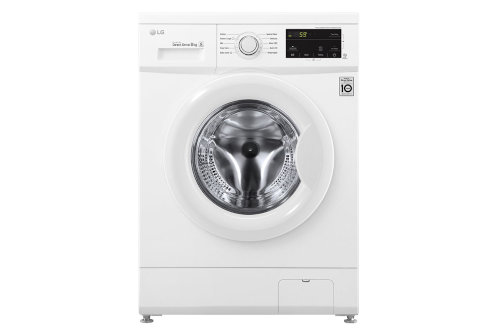
LG Washing Machine
LG Washing Machine

Are energy efficient washing machines worth it?

As it turns out, yes. A shiny new High Efficiency washer will save so much in operating costs throughout the next several years, it’ll be like getting the matching dryer for free. HE washers cost less to operate because they use less water, electricity and even less detergent.

Currently LG has three washing machines in the Energy Star Top 5 most efficient washing machines list.

We owe the invention of the washing machine to Jacob Christian Schäffer (1767). 30 years later, an American, Nathaniel Briggs, obtained the first patent for a washing machine. It involved pouring hot water into a tank, turning a lever to wash the clothes and then wringing them between two rollers. The tank was then drained using a tap.

210 years further on, the electric washing machine was invented.

In 1905, the first drum washing machines appeared. They were still hand-operated but the steel tank allowed for a coal burner to be included.

Towards 1920, the first electric machines were born: only the turning mechanism was electric. The remaining controls were still manual.

It was only in 1930 that the machines became automatic. Pressure switches, thermostats and timers were included in the new models. From the 1980s onwards, advances in the field of electronics meant washing machines became reactive and ecological: Adjustment of parameters thanks to sensors: water level, rate, spinning; Weight sensing; Different cycles: colors, whites, wool, synthetics and Energy & water saving.

In 1990, a British inventor, James Dyson, produced a washing machine with two cylinders which turned in opposite directions, thus reducing washing times and giving better results.

Nowadays, washing machines are connected to the internet and may have integrated Wi-Fi for deferred startup of washing programs, for instance during off-peak times when electricity costs are at their lowest. Some models work without detergent, thanks to electrolysis, which separates the positive and negative ions.

Filed Under: Tips

Electricity Saving Tip – Air Conditioning

16 February 2021 By //  by Alan

What is HVAC? Heating, Ventilation and Air Conditioning.

HVAC is the new frontier in Building Systems as proper management via a Building Management System will reap large energy savings per year.

Air conditioning circulates the air and makes your home more comfortable. It maintains the temperature at a suitable level, dehumidifies, and removes dust and particles from the air,

Here are some ways to increase its efficiency:

  • Clean and inspect filter screens regularly. This will keep electricity consumption at its best and eliminate dust and pollen from conditioned air.
  • Use light coloured curtains to reflect sun and heat outward.
  • Set the air conditioning unit to re-circulate cool air instead of drawing in warmer outside air.
  • Protect the outdoor cooling units from the sun. Place them on the south or shady side of your house.
  • Be sure your television, radio and stereo are off when no one is watching or listening.
  • Generally, you should turn your heating/cooling system off when the space in unoccupied. You can use a time-clock to turn them on prior to occupancy again if you like. Do not heat storage and unoccupied areas, like the basement or garage.
  • Incorporate a Building Management System in new builds.

Go further and save more with: Building Automation Systems / Solar PV Installations / Metering Solutions.

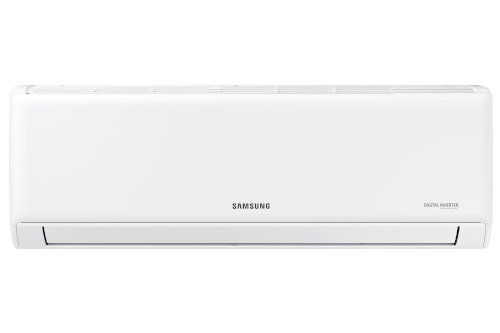
Inverter air conditioners are the most energy efficient

Samsung AR4500 Inverter Air Conditioner 9000 BTU

Two main kinds of air conditioners are inverter and non-inverter systems.

The motor in an inverter air conditioner is self-regulating. This means the motor speed varies continually to maintain an even room temperature.

In contrast, non-inverter air conditioners have a single-speed motor that frequently turns off and then on again.

Inverter air conditioners are more expensive, but save on energy costs over time.

Split AC systems consist of an indoor and an outdoor unit. They also user inverter technology, but will save you money due to greater energy efficiency and durability.

he size, or cooling capacity, of an air conditioner is indicated by its BTU, or British Thermal Unit. This is a measurement of how much heat the unit can add or remove from the air per hour.

The most energy-efficient air conditioner for your needs will have a BTU suited to the size of the space you want to cool.

Other factors also have some effect. For instance, the best BTU for your space depends on climatic conditions.

It’s also affected by the positioning of the building, the type and quality of the insulation, the type and size of your windows and the height of your ceilings.

In general, the recommendation for air conditioners in South Africa is 500 BTU per square metre.

For example, a 20 m² room would require an air conditioner with 10 000 BTU.

Determine the air conditioner’s energy efficiency ratio:

Each air conditioner has a specific energy efficiency ratio (EER).

EER is the cooling capacity of a unit – its BTU – divided by the kilowatts per hour (kWh) it uses at full power.

Say a 10 000 BTU air conditioner were to use 1 200 kWh. It’s EER can be calculated as 10 000 / 1 200, which equals 8.3.

A recent market survey of the EER for the most efficient air conditioners all scored above 12.

The higher the EER rating, the more efficient the air conditioner – and the less it will cost you to run.

A 12 EER rating is an excellent energy-efficiency rating for an air conditioner. Some of the best devices can even reach more than 12 EER. The best mini split air conditioners have an extremely high 12+ EER rating.

Filed Under: Tips

Electricity Saving Tip – Lighting

16 February 2021 By //  by Alan

What are the the most energy efficient Light Bulbs? LED’s.

LEDs use much less energy than incandescent bulbs because diode light is much more efficient, power-wise, than filament light. LED bulbs use more than 75% less energy than incandescent lighting

You will save energy, money and eye strain by lighting your home properly. Follow these guidelines:

  • The wattage of a bulb is not a measure of the amount of light it gives, but rather the energy it uses. For instance, a 100 watt bulb gives 50% more light than four 25 watt bulbs.
  • Fluorescent lamps give five times the light and last up to 10 times as long as ordinary bulbs.
  • Fluorescent lighting is more economical – Watt for Watt than incandescent bulbs. They use less energy and can last about 10 times longer. (Image on Slide: Use Electricity Wisely – In the Bedroom)
  • Never confine lighting to one part of the room. Avoid heavy contrast by using lamp shades that direct light both up and down.
  • Try not to install multiple lights (lamps or lighting fixtures) on a single switch. Above all, turn lights off whenever possible because, they use electricity while they burn.
  • Clean your lamps and bulbs regularly, because dirt decreases the amount of light given out.
  • Dimming switches allow you to regulate the light level and reduce electricity consumption to some extent.
  • Use lampshades with a white liner. Liners should be sufficiently dense to hide the bulb but should transmit soft, even light.
  • Use low energy lamps for exterior lighting.
  • In a domestic and work environment a task light like a desk lamp is far more energy efficient than general lights at the ceiling because it lights only the area that needs to be lit from a very short distance.

Go further and save more with: Building Automation Systems / Solar PV Installations / Metering Solutions.

Efficient lighting programmes can be implemented by:

  • Replacing traditional incandescent bulbs with compact fluorescent light bulbs (CFLs).
  • Replacing old fluorescent tubes with efficient fluorescent tubes.
  • Replacing old magnetic ballasts with electronic ballasts in fluorescent tube systems.
  • Installing lighting control systems (motion and lux level sensors)
  • Using light-emitting diode (LED) technology wherever possible. LED’s are now able to replace most conventional lighting applications, such as traffic lights, down lighters, streetlights, security lights and even strip lighting to replace fluorescent tubes.
  • Making streetlights more efficient e.g. by replacing mercury vapour lights with high pressure sodium lights or LEDs that operate on around a third of the power. LED lights have more than double the life span.
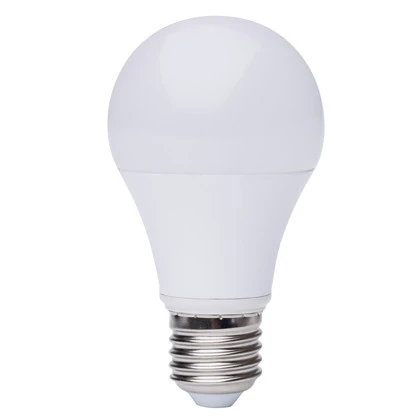
LED Light Bulb
LED Light Bulb

LED bulbs range in warmth from cool blue-white light to a sunny yellow light. They can also be used to create ultraviolet light and a variety of colors, in case you want rainbow colored under-counter lights, for instance. Some LEDs are dimmable, while others give off a constant illumination.

LED A bulbs have a bulbous shape and are useful for lamps and regular ceiling lights. They don’t cast light evenly, though, so are not great for larger spaces or where you want really good illumination (such as for a studio.

It’s also important to note that LEDs throw out more blue spectrum light than incandescent bulbs and CFLs. Blue light is particularly bad for interfering with circadian rhythms by suppressing melatonin production. So, if you are looking for a night light or evening lamp, go for an LED with warm light instead of a clinical blue hue. Warmer light is around 2700K (with K meaning Kelvin for temperature). White light is about 3000K, while blue-white light is 5000K or more.

Straton Electrical always recommend that consumers embark on an energy savings programme, like installing LED Light Bulbs, before installing a Solar PV System for electricity cost savings.


Filed Under: Tips

Electricity Saving Tip – Small Appliances

16 February 2021 By //  by Alan

Does unplugging appliances save electricity?

The short answer is Yes! The energy costs of plugged-in appliances can really add up, and unplugging these devices could save your up to R400 a year. Another benefit of unplugging your appliances is protection from power surges and load shedding.

  • Using small kitchen appliances instead of the stove can save energy. Toasters, electric grills and skillets, slow cookers, electric coffee pots and bottle warmers usually require less energy than the stove when used correctly.
  • Use an electric kettle to boil water, not a sauce pan or a microwave.
  • When vacuuming, empty or replace the dust bag frequently.
  • A faulty appliance will not work efficiently and can waste energy. Repair or replace them promptly.

Go further and save more with: Building Automation Systems / Solar PV Installations / Metering Solutions.

Small appliances are typically small household electrical machines, also very useful and easily carried and installed.

Russell Hobbs Eco Kettle

Small appliances include those used for:

  • Beverage-making, such as electric kettles, coffeemakers or iced tea-makers
  • Cleaning, such as Vacuum cleaner
  • Cooking, such as on a hot plate or with a microwave oven
  • Lighting, using light fixtures
  • Thermal comfort, such as an electric heater or fan

Many small appliances perform a combination of the above processes such as mixing, heating by a bread machine.

Energy Efficient Kettles:

The estimated cost to boil a normal kettle per boil is R0.34.

An average family boils the kettle 3-5 times a day giving an average cost per year to boil water of R620.50.

Our choice of Energy Efficient kettle is the Russell Hobbs Eco-Kettle with a printed Eco Element that is 50% lighter than normal and heats up in 2 seconds with instant stop technology. Russell Hobbs say that over 6 Million kettles are sold in South Africa annualy and if every one of those bought was an Eco Kettle then we could collectively save R558 Million rand in electricity per year and reduce Carbon Consumption by as much as 78 Million kg per annum.


Filed Under: Tips

Electricity Saving Tip – Microwave Oven

16 February 2021 By //  by Alan

The energy-efficient cooking winner is the microwave oven!

Choosing to cook with a microwave vs oven can use from 30% to as much as 80% less energy. Microwaves use high-frequency radio waves to heat the water molecules inside food.

Microwave Energy Saving Tips:

  • Defrost your food in the refrigerator instead of the microwave oven: it is more economical.
  • Use your microwave oven to cook small to medium quantities of food. To cook larger portions of meat, it is better to use a conventional oven.
  • Some microwaves do not heat up foods evenly. Wrap foods in plastic to hold in the steam, this will help to give even heating. Be very careful not to cover the foods too well, steam can burn you badly when you open the packet, so leave a flap open for the steam to escape.
  • Cooking time is an important factor when determining energy efficiency levels. Compare cooking times when you cook the same food in the microwave, in the standard oven, on stove top elements or in a pressure cooker. You will easily see which method of cooking is more efficient depending on quantity, volume and food types.
  • Follow the Manufacturers instructions to ensure that food is cooked correctly. Keep in mind that microwave recipe books give the cooking times required by the appliance used by the authors. Adjust cooking times to suit your micro- wave rating.
  • Never turn your microwave on when it is empty, you could damage it.
  • Keep the edges of your microwave door and its hinges clean. To wash the inside of your oven, boil a cup of water in it and then wipe the sides with a damp cloth.

Go further and save more with: Building Automation Systems / Solar PV Installations / Metering Solutions.

A Microwave takes about 1200 watts per hour for an average microwave to run.

Microwave Oven
Microwave Oven

Microwaves are the most energy-efficient means of cooking, followed by slow cookers, hobs, and lastly ovens, so use your microwave as much as possible – and remember to turn it off at the wall after use to conserve even more energy (nobody uses them as a clock anyway!)

In 1947, Raytheon built the “Radarange”, the first commercially available microwave oven. It was almost 1.8 metres (5 ft 11 in) tall, weighed 340 kilograms (750 lb) and cost about US$5,000 ($57,000 in 2019 dollars) each. It consumed 3 kilowatts, about three times as much as today’s microwave ovens, and was water-cooled. The name was the winning entry in an employee contest. An early Radarange was installed (and remains) in the galley of the nuclear-powered passenger/cargo ship NS Savannah. An early commercial model introduced in 1954 consumed 1.6 kilowatts and sold for US$2,000 to US$3,000 ($19,000 to $29,000 in 2019 dollars). Raytheon licensed its technology to the Tappan Stove company of Mansfield, Ohio in 1952. Under contract to Whirlpool, Westinghouse, and other major appliance manufacturers looking to add matching microwave ovens to their conventional oven line, Tappan produced several variations of their built-in model from roughly 1955 to 1960. Due to maintenance (some units were water cooled), in-built requirement, and cost (US$1,295 ($12,000 in 2019 dollars)), sales were limited.

Japan’s Sharp Corporation began manufacturing microwave ovens in 1961. Between 1964 and 1966, Sharp introduced the first microwave oven with a turntable, an alternative means to promote more even heating of food. In 1965, Raytheon, looking to expand their Radarange technology into the home market, acquired Amana to provide more manufacturing capability. In 1967, they introduced the first popular home model, the countertop Radarange, at a price of US$495 ($4,000 in 2019 dollars). Unlike the Sharp models, a motor driven mode stirrer in the top of the oven cavity rotated allowing the food to remain stationary.

In the 1960s, Litton bought Studebaker’s Franklin Manufacturing assets, which had been manufacturing magnetrons and building and selling microwave ovens similar to the Radarange. Litton developed a new configuration of the microwave oven: the short, wide shape that is now common. The magnetron feed was also unique. This resulted in an oven that could survive a no-load condition: an empty microwave oven where there is nothing to absorb the microwaves. The new oven was shown at a trade show in Chicago, and helped begin a rapid growth of the market for home microwave ovens. Sales volume of 40,000 units for the U.S. industry in 1970 grew to one million by 1975. Market penetration was even faster in Japan, due to a less expensive re-engineered magnetron. Several other companies joined in the market, and for a time most systems were built by defence contractors, who were most familiar with the magnetron. Litton was particularly well known in the restaurant business.
Residential use

While uncommon today, combination microwave-ranges were offered by major appliance manufacturers through much of the 1970’s as a natural progression of the technology. Both Tappan and General Electric offered units that appeared to be conventional stove top/oven ranges, but included microwave capability in the conventional oven cavity. Such ranges were attractive to consumers since both microwave energy and conventional heating elements could be used simultaneously to speed cooking, and there was no loss of countertop space. The proposition was also attractive to manufacturers as the additional component cost could better be absorbed compared to countertop units where pricing was increasingly market-sensitive.

By 1972, Litton (Litton Atherton Division, Minneapolis) introduced two new microwave ovens, priced at $349 and $399, to tap into the market estimated at $750 million by 1976, according to Robert I Bruder, president of the division. While prices remained high, new features continued to be added to home models. Amana introduced automatic defrost in 1974 on their RR-4D model, and was the first to offer a microprocessor controlled digital control panel in 1975 with their RR-6 model.

1974 Radarange RR-4. By the late 1970s, technological advances led to rapidly falling prices. Often called “electronic ovens” in the 1960s, the name “microwave oven” later gained currency, and they are now informally called “microwaves”.

The late 1970’s saw an explosion of low-cost, countertop models from many major manufacturers.

Formerly found only in large industrial applications, microwave ovens increasingly became a standard fixture of residential kitchens in developed countries. By 1986, roughly 25% of households in the U.S. owned a microwave oven, up from only about 1% in 1971; the U.S. Bureau of Labor Statistics reported that over 90% of American households owned a microwave oven in 1997. In Australia, a 2008 market research study found that 95% of kitchens contained a microwave oven and that 83% of them were used daily. In Canada, fewer than 5% of households had a microwave oven in 1979, but more than 88% of households owned one by 1998. In France, 40% of households owned a microwave oven in 1994, but that number had increased to 65% by 2004.

Adoption has been slower in less-developed countries, as households with disposable income concentrate on more important household appliances like refrigerators and ovens. In India, for example, only about 5% of households owned a microwave oven in 2013, well behind refrigerators at 31% ownership. However, microwave ovens are gaining popularity. In Russia, for example, the number of households with a microwave oven grew from almost 24% in 2002 to almost 40% in 2008. Almost twice as many households in South Africa owned microwave ovens in 2008 (38.7%) as in 2002 (19.8%). Microwave oven ownership in Vietnam was at 16% of households in 2008—versus 30% ownership of refrigerators; this rate was up significantly from 6.7% microwave oven ownership in 2002, with 14% ownership for refrigerators that year.

Consumer household microwave ovens usually come with a cooking power of 600 watts and up, with 1000 or 1200 watts on some models. The size of household microwave ovens can vary, but usually have an internal volume of around 20 liters (1,200 cu in; 0.71 cu ft), and external dimensions of approximately 45–60 cm (1 ft 6 in–2 ft 0 in) wide, 35–40 cm (1 ft 2 in–1 ft 4 in) deep and 25–35 cm (9.8 in–1 ft 1.8 in) tall.

As of 2020, the majority of countertop microwave ovens (regardless of brand) sold in the United States were manufactured by the Midea Group.

Energy consumption: As of 2006, a typical microwave oven consumed more energy in standby power usage around the clock than it does on heating food.

Filed Under: Tips

Electricity Saving Tip – Electric Stove

16 February 2021 By //  by Alan

Electric ovens that are used regularly can be significant consumers of energy in households.

Consumers who make regular use of their ovens should carefully consider their choice of oven before making a decision to purchase.

To protect consumers from purchasing inefficient electric ovens, Minimum Energy Performance Standards (MEPS) have been set for electric ovens. Currently, only large electric ovens with an Energy Efficiency Rating of Class B or better can be sold. With regards to small/medium electric ovens, an Energy Efficiency Rating of Class A or better can be sold.

The larger an electric oven, the more energy required to heat the oven space. As a result, the most important decision to be made when purchasing an electric oven from an energy efficiency perspective is what size oven to purchase. Ideally, consumers should purchase the smallest oven that meets their baking and roasting needs.

Electric ovens being sold must be labelled with a South African Energy Efficiency Label to help consumers understand the relative energy efficiency of different electric ovens.

Electric Oven Energy Label
Sample of a label for an electric oven with an explanation of the key elements of the label.
  • Use cooking utensils with flat bottoms and tight fittings covers.
  • Be sure pots and pans completely cover the stove plates.
  • Take advantage of the heat sensing control for stove plates. It allows the stove plate to cut of the electricity supply occasionally while still cooking. It does not affect the food, only your bill.
  • Use a pressure cooker to conserve energy when cooking foods that take a long time, such as pot roasts, stews and steamed puddings.
  • Do not overcook foods, especially vegetables. Overcooking destroys essential nutrients.
  • For full efficiency from radiant stove plates the stove plate reflectors (underneath the stove plates) should always be kept clean.
  • Bring foods to the boil quickly on the “high” setting, then turn the heat down to simmer to finish cooking.
  • Do not use the grilling compartment to make toast – it is very expensive.
  • Do not use the oven to heat the kitchen – it is very expensive and far less efficient than a heater
  • Keep oven doors completely closed until food is cooked. Every time the door is opened, the oven temperature drops, and the heat must be replaced.
  • Use the oven to prepare an entire meal – main course, vegetables and dessert. Remember to plan meals that cook in the oven at the same temperature.
  • Allow free circulation of heat within the oven. Place pans and containers so that they do not touch each other, or the sides of the oven.
  • To keep food warm place in a 66¦C (150¦F) or 82¦C (180¦F) oven. Do not leave it too long or your meal will be very dry.
  • When buying a new stove, choose one with a convection oven. This type of oven uses less energy than conventional ovens and cooking time is substantially reduced

Go further and save more with: Building Automation Systems / Solar PV Installations / Metering Solutions.

Filed Under: Tips

Electricity Saving Tip – Freezer

16 February 2021 By //  by Alan

Which is More Energy Efficient? Chest or Upright Freezers?

Because of the built-in sidewall insulation, chest freezers hold their cold temperatures very well and therefore use the least amount of energy to run. In fact, during a power outage or a household move to another locale, as long as the freezer lid is not open, an unplugged chest freezer can keep the contents frozen for two or even three days, depending on the frozen food quantity.

Freezer Energy Saving Tips:

  • Freezers and refrigerators operate most efficiently when filled to the capacity recommended by the manufacturers.
  • Never forget that only one-tenth of a freezer’s capacity should be used for freezing of fresh food at any one time. The freezer must work harder to remove heat, and uses more power. Example, 28 litres (one cubic foot) will store 12,5 to 15 kg (25-30 lbs.) of frozen food and will freeze about 1,5 kg (3 lbs.) of fresh food at a time.
  • Food to be frozen should be placed in contact with those parts of the freezer that contain the refrigerant tubes, usually the sides of chest models.
  • Defrosting of chest type freezers should be done once or twice a year. For upright models, defrosting should be done two or three times a year. NEVER allow frost build up to exceed 0,6 to 1,3 cm.
  • By keeping a list of the location of foods in the freezers, the freezer can be kept open for a minimum of time, preventing the loss of cold air.
  • The freezer should be kept as full as possible to prevent heavy icing.
  • On all models keep condenser panels at the rear of the freezer clean and dust free for maximum efficiency and conservation of energy.
  • A second freezer should only be operated when necessary.
  • In a single door unit, it is essential that the separate freezer compartment has its own door intact. Otherwise the unit will tend to operate the whole of the refrigerator as a freezer – this can be expensive.

Go further and save more with: Building Automation Systems / Solar PV Installations / Metering Solutions.

Fridges and freezers account for the largest single energy consumption for domestic appliances. Reducing the amount of energy that these units consume rests on two actions:

  1. Improving the thermodynamic (“cooling”) efficiency of the refrigeration cycle
  2. Reducing the amount of heat gain (“heating”) from the environment

Commercial refrigeration has been around since John Gorrie invented the freezer in 1842. In the following 170 years, the evolution of technology and refrigeration has vastly improved and continues to do so.

Apart from improvements in the mechanical equipment, two major aspects where we can still improve on are increasing the “cooling” effect while reducing unwanted “heating”.

The R600 refrigerant, more commonly known as Butane, is the most commonly used in all domestic refrigeration products. R600 is a readily available naturally occurring hydrocarbon that has less of an environmental impact compared with its synthetic equivalent, R134 (Tetrafluoroethene).

Keeping the inside of fridges cool is also no easy task. The ideal insulation would consist of a hyper-reflective surface held at a vacuum to eliminate radiation and the transfer of heat. Unfortunately, current technology combined with product durability and manufacturing costs limits the extent to which this approach can be pursued. The next best thing we can do is decrease heat conduction by improving insulation materials.

Key Feature differences between Chest and Upright Freezers:

Defy DMF4755 Solar Hybrid 254 liter Freezer

Chest Freezers usually come with at least one wire basket to help you organize the contents. You can segregate types of foods using cardboard boxes to better organize freezer contents. However, chest freezers require a lot of bending, reaching, and moving frozen foods to find what you’re looking for.

That being said, they do accommodate odd-shaped, long, or large items that may be difficult to place in an upright freezer. There are some models on the market that have a bottom drawer accessible from the outside of the chest freezer, but while this can add convenience to a chest model, it will also reduce capacity slightly.
Upright Freezer

Probably the best convenience feature of an upright freezer is the ability to better organize the frozen foods, making it easier to monitor and rotate contents to keep frozen foods current. Some upright models have versatile storage systems with adjustable and removable door storage bins, sliding, adjustable shelving, and pull-out baskets or bins.

All these features add to the ease of sorting and storing contents. Although you can better organize an upright, there are constraints. Items such as large turkeys or long, frozen items may not fit without removing a shelf to accommodate the size.

Our Choice:

The Defy Solar Hybrid Chest Freezer – DMF475S + SOL006 which uses Solar Energy and the Electrical grid to run the same unit. This 254 liter solution will simply use as much solar energy that is available and use the electrical grid when there is no solar energy. In doing this it can use a combination of solar and electrical grid at the same time, ensuring you get the most out of the solar system provided.

Filed Under: Tips

  • « Go to Previous Page
  • Page 1
  • Page 2
  • Page 3
  • Go to Next Page »

Footer

RSS Gqeberha News

  • The Top 10 Digital Marketing Agencies in South Africa (2026)
  • G-Force Festival Set to Thrill Durban as the Virginia Airshow Returns
  • Josh Maraney Launches a Free, Searchable Library of More Than 700 Short-Form Videos
  • FirstRand Volunteers Mobilised 2,500 Employees Nationwide to Honour Mandela’s Legacy Through Action
  • Vital Questions to Ask an AV Client Needing Web Site Development

RSS BA Systems

  • Building Automation: The Future is Here
  • If You Can Measure it, You Can Manage it
  • A Smart Solution for Property Owners
  • Magical C-Bus
  • Embracing the Power of C-Bus, EcoXpert and Beyond

Google Reviews

Click HERE or Snap to leave a Google Review.

Google Reviews QR Code
  • BA Systems
  • Mbane
  • Reach Trust
  • Stratlec Shop
  • Straton Electrical
  • Straton Prepaid
  • Straton Solar

Site Footer

Copyright © 2026 · Straton Electrical · Phone: 041 505 4600 · 13 Mangold Street, Gqeberha, Nelson Mandela Bay, Eastern Cape, South Africa