
What are the the most energy efficient Light Bulbs? LED’s.
LEDs use much less energy than incandescent bulbs because diode light is much more efficient, power-wise, than filament light. LED bulbs use more than 75% less energy than incandescent lighting
You will save energy, money and eye strain by lighting your home properly. Follow these guidelines:
- The wattage of a bulb is not a measure of the amount of light it gives, but rather the energy it uses. For instance, a 100 watt bulb gives 50% more light than four 25 watt bulbs.
- Fluorescent lamps give five times the light and last up to 10 times as long as ordinary bulbs.
- Fluorescent lighting is more economical – Watt for Watt than incandescent bulbs. They use less energy and can last about 10 times longer. (Image on Slide: Use Electricity Wisely – In the Bedroom)
- Never confine lighting to one part of the room. Avoid heavy contrast by using lamp shades that direct light both up and down.
- Try not to install multiple lights (lamps or lighting fixtures) on a single switch. Above all, turn lights off whenever possible because, they use electricity while they burn.
- Clean your lamps and bulbs regularly, because dirt decreases the amount of light given out.
- Dimming switches allow you to regulate the light level and reduce electricity consumption to some extent.
- Use lampshades with a white liner. Liners should be sufficiently dense to hide the bulb but should transmit soft, even light.
- Use low energy lamps for exterior lighting.
- In a domestic and work environment a task light like a desk lamp is far more energy efficient than general lights at the ceiling because it lights only the area that needs to be lit from a very short distance.
Go further and save more with: Building Automation Systems / Solar PV Installations / Metering Solutions.
Efficient lighting programmes can be implemented by:
- Replacing traditional incandescent bulbs with compact fluorescent light bulbs (CFLs).
- Replacing old fluorescent tubes with efficient fluorescent tubes.
- Replacing old magnetic ballasts with electronic ballasts in fluorescent tube systems.
- Installing lighting control systems (motion and lux level sensors)
- Using light-emitting diode (LED) technology wherever possible. LED’s are now able to replace most conventional lighting applications, such as traffic lights, down lighters, streetlights, security lights and even strip lighting to replace fluorescent tubes.
- Making streetlights more efficient e.g. by replacing mercury vapour lights with high pressure sodium lights or LEDs that operate on around a third of the power. LED lights have more than double the life span.
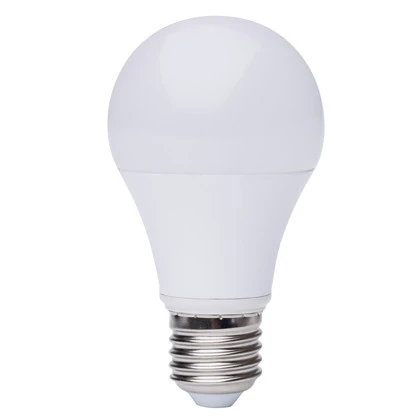
LED bulbs range in warmth from cool blue-white light to a sunny yellow light. They can also be used to create ultraviolet light and a variety of colors, in case you want rainbow colored under-counter lights, for instance. Some LEDs are dimmable, while others give off a constant illumination.
LED A bulbs have a bulbous shape and are useful for lamps and regular ceiling lights. They don’t cast light evenly, though, so are not great for larger spaces or where you want really good illumination (such as for a studio.
It’s also important to note that LEDs throw out more blue spectrum light than incandescent bulbs and CFLs. Blue light is particularly bad for interfering with circadian rhythms by suppressing melatonin production. So, if you are looking for a night light or evening lamp, go for an LED with warm light instead of a clinical blue hue. Warmer light is around 2700K (with K meaning Kelvin for temperature). White light is about 3000K, while blue-white light is 5000K or more.
Straton Electrical always recommend that consumers embark on an energy savings programme, like installing LED Light Bulbs, before installing a Solar PV System for electricity cost savings.
 Electricity Saving Tip – Small Appliances

