
What Type of Heater is cheapest to run? Infrared Type Heaters.
Infrared heaters provide exceptionally efficient room heating using radiation – heating people, objects and surfaces directly without wasting energy warming the air.
The cost of a heater is an important consideration in the selection process. There are two cost components to bear in mind: the purchase price and the cost of running the heater. The purchase price is an easy, direct comparison. Running costs depend on the type and cost of the fuel source and the efficiency with which the heater turns this fuel source into useful heat.
In South Africa, we mainly make use of electricity or gas as fuel sources for heaters. The benefit of gas is that it provides instant heat and is available when electricity supply (loadshedding) is a concern. The downside is, however, that gas in South Africa is considerably more expensive than electricity (despite recent electricity price hikes). Almost all electrical heater options are significantly more economical than gas heaters.
Decide what type of heat you need – quick and warm (convection type heaters) for people staying in a room for short periods of time will be more expensive than slow and warm (wall panel type heaters) for bedrooms.
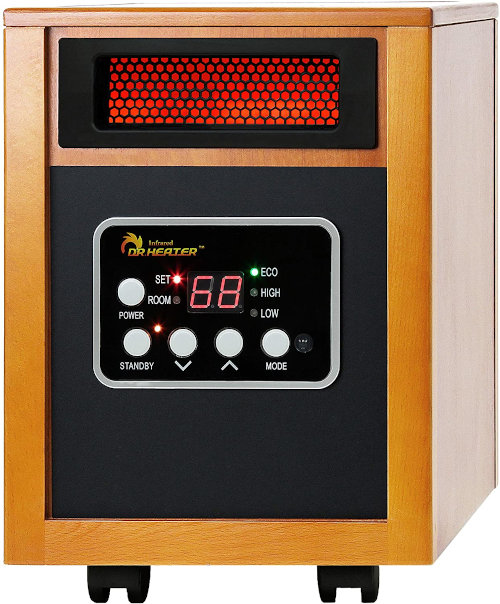
Infrared heaters are more electricity efficient than other space heating systems. These types of heaters can be used both for spot heating and area heating. They transfer energy directly by radiation, creating heat and comfort instantly without the use of air-circulation fans. An infrared heater will warm the people in the room rather than the space. Infra-red heaters often use metal-sheated infrared radiation elements, reflector lamps or quartz tubes.
The oil filled heater is the safest type of heater for the bedroom. A thermostat control switches the unit on and off as required, but to save energy, only use on the lowest comfortable setting.
Electric blankets consume little electricity. However, the correct method of use is to switch them on to the highest setting and warm the bed just before climbing in – then switch them off.
Close doors and windows when using a heater.
Go further and save more with: Building Automation Systems / Solar PV Installations / Metering Solutions.
It is important to give some thought to how you are likely to use the heater and select the best type for your application. Consider the cost of running the heater in your preferred way. Also bear in mind the safety of open elements, gas leaks, etc. Whichever option you select, be sure to start with no cost or lowest cost warming options first. Dress warmly, make sure curtains are drawn, windows and doors are closed, and openings are sealed. Ceiling insulation is generally a good option to save heating costs. Hot water bottles and electric blankets are other alternatives available for localized warmth at low costs. And remember don’t ramp up the heat too quickly. Hot and stuffy rooms require ventilation which leads to wasted energy and unnecessary costs!
Wall panel heaters have amongst the lowest running costs. These heaters are suitable for heating rooms of up to 12m2. They are easy to install on a wall. However, they use a low wattage so the heat they provide will be less than a gas heater or fin heater, for example. And they aren’t portable.
Most models of infrared heaters have cool-to-touch exteriors and are safe to use with young children and pets in the home. Though clearances are not as much of an issue as with hot-coil heaters, you should remove clutter in the heater’s area to ensure that heat can freely be dispersed to the room. As with any electrical heaters, keep papers, clothing, magazines, and other similar items away from the heater.
Infrared heaters are designed to be room, zone, or space heaters.
The overall efficiency of the infrared heaters depends greatly on how the unit is engineered, constructed, and how much it’s being used in coordination with other heat sources in your home.
There are three models of electric infrared heaters: portable wheeled units with infrared heating technology, compact heaters with (partial) infrared capability combined with other forms of heating systems, and freestanding electric infrared fireplaces.
Bonus Electricity Saving Tip – Insulation
In parts of South Africa, during winter, the heating of rooms is one of the largest sources of electricity consumption in a home. Improving a home’s thermal insulation can save hundreds of Rands a year in space heating costs and improve the home’s comfort.
Insulate The Ceiling:
Insulating the ceiling helps make a home a comfortable electricity efficient place. As much as 50% of heat losses in a house can be attributed to a lack of ceilings and ceiling insulation. If a home’s ceiling is well insulated, heating and cooling expenses can be kept low. The effectiveness of ceiling insulation depends on the type of material from which it is made, its thickness and its density.
Ceiling insulation in SA varies from fibreglass insulation to a type of insulation prepared from a mixture of paper and other materials. The latter is blown into the ceiling, sealing the total roof area. Any of the methods are equally effective and the supplier of these insulation’s will be able to offer reliable information about ceiling insulation.
 Electricity Saving Tip – Iron
