
Is a Front or Top Load Washing Machine the most efficient? Front Loading Machines are the most efficient.
A key consideration for consumers when buying a washing machine is the size of the machine. Running a washing machine with a large drum but with a load that is much smaller than its capacity will waste electricity, so consumers should select a washing machine size that is appropriate to their household size. Washing machines with a smaller drum are best suited to households that do regular, small washes. Washing machines with a larger drum are best suited to households that need to wash large loads at one time.
Energy Savings Tips for Washing Machines:
- Washing machines that are used regularly can be significant users of both energy and water in households. Purchasing a more efficient washing machine will save electricity and water for years to come.
- Buy a washing machine, which offers a variety of water temperature settings.
- A front loading washing machine uses less water and costs less to operate even though the purchase price may be higher than a top loader.
- Use warm and cold water setting as much as possible in order to cut down on energy needed to heat the water.
- Take advantage of special features on your washer that can save money. For example, soak cycles remove stubborn stains in one wash cycle.
- The automatic washing machine uses the same amount of electricity for a full load as it consumes for a single item. Save dirty clothes until a full load has accumulated.
- Never overload your automatic washing machine. Overloading will reduce the cleaning action. (Varying the size of garments in a full load improves the cleaning action by allowing free circulation).
Go further and save more with: Building Automation Systems / Solar PV Installations / Metering Solutions.
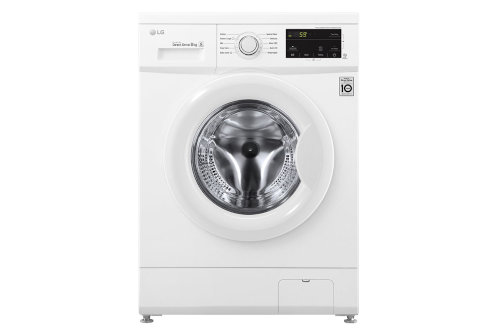
Are energy efficient washing machines worth it?
As it turns out, yes. A shiny new High Efficiency washer will save so much in operating costs throughout the next several years, it’ll be like getting the matching dryer for free. HE washers cost less to operate because they use less water, electricity and even less detergent.
Currently LG has three washing machines in the Energy Star Top 5 most efficient washing machines list.
We owe the invention of the washing machine to Jacob Christian Schäffer (1767). 30 years later, an American, Nathaniel Briggs, obtained the first patent for a washing machine. It involved pouring hot water into a tank, turning a lever to wash the clothes and then wringing them between two rollers. The tank was then drained using a tap.
210 years further on, the electric washing machine was invented.
In 1905, the first drum washing machines appeared. They were still hand-operated but the steel tank allowed for a coal burner to be included.
Towards 1920, the first electric machines were born: only the turning mechanism was electric. The remaining controls were still manual.
It was only in 1930 that the machines became automatic. Pressure switches, thermostats and timers were included in the new models. From the 1980s onwards, advances in the field of electronics meant washing machines became reactive and ecological: Adjustment of parameters thanks to sensors: water level, rate, spinning; Weight sensing; Different cycles: colors, whites, wool, synthetics and Energy & water saving.
In 1990, a British inventor, James Dyson, produced a washing machine with two cylinders which turned in opposite directions, thus reducing washing times and giving better results.
Nowadays, washing machines are connected to the internet and may have integrated Wi-Fi for deferred startup of washing programs, for instance during off-peak times when electricity costs are at their lowest. Some models work without detergent, thanks to electrolysis, which separates the positive and negative ions.
 Electricity Saving Tip – Air Conditioning

