
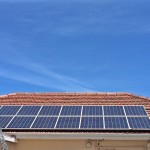
Many suppliers of solar equipment are promoting DIY solar power equipment aimed at the enthusiastic handyman looking to save a buck on a renewable energy generation system.
Inevitably the DIY Installer hits a brick wall when looking to take advantage of Grid Tie by applying for the installation of a bi-directional Smart Meter as part of an ‘Application for the connection of Small Scale Embedded Generation (SSEG)’ from the local Municipality.

Essentially this application is the last step in the journey to Grid Tie and needs to be completed by a professional well versed with the installation and the regulations surrounding such connections to the Grid.
“One needs to appreciate that the regulations are there for a purpose – to protect consumers and users of the Grid and as such it is vital for a professional to complete the application,” says Alan Straton from Straton Solar.
The application seeks specific details and measurements from the system installed along with a professional registration number and signature attesting to the safety of the installation. Essentially the professional is being told that he/she carries the responsibility for the system.
The professional signs the following declaration:
I request Nelson Mandela Bay Municipality to proceed with a preliminary review of this embedded generation interconnection application and I agree to pay the cost associated with completing this review and written consent of Nelson Mandela Bay Municipality.
I further consent to Nelson Mandela Bay Municipality providing this information to the National Electricity Regulator of SA (NERSA) and other Distributors as required.
I declare that this installation has been designed to comply with the requirements of Nelson Mandela Bay Municipality’s Electricity and Energy Directorate.
I declare that the grid connected generator interconnection equipment has been type-test certified to comply with the minimum technical requirements of NRS 097-2-1.
In essence the professional submitting the application certifies that the installation complies to a whole host of Regulatory Approvals, Requirements and Normative References.
Depending on the type of renewable energy installation these Regulatory Approvals could consist of some or all of the following:
- Electricity Regulation Act, Act 4 of 2006 and Electricity Regulation Amendment Act, 2006
- Department of Environmental Affairs & Tourism in terms of Environmental Conservation Act, No. 73 of 1989 and National Environmental Management Act, No. 107 of 1998, (as amended)
- Occupational Health & Safety Act, No. 85 of 1993 as amended
- Compulsory Specifications Act, No. 5 of 2008
- South African Distribution Code (all parts)
- South African Grid Code (all parts)
- Nelson Mandela Bay Municipal By-laws
- IEC 60068-2-1: Environmental Testing – Part 1 Cold
- IEC 60068-2-1: Environmental Testing – Part 2 Dry Heat
- IEC 60068-2-30: Environmental Testing – Part 30 Damp Heat, cyclic (12h + 12h cycle)
- IEC 60255-3: Electrical relays – Part 3: Single input energizing quantity measuring relays with dependent and independent time
- IEC 60255-6: Electrical relays – Part 6: Measuring relays with dependent and protection equipment
- IEC 60255-21: Electrical relays – Part 21: Vibration, shock, bump and seismic tests on measuring relays and protection equipment (all sections)
- IEC 60255-22: Electrical relays – Part 22: Electrical disturbance tests for measuring relays and protection equipment (all sections)
- IEC 61727: Photovoltaic (PV) systems – Characteristics of the utility interface.
- IEC 62271 -100: High voltage alternating current circuit breakers
- IEC 62116: Test procedure of islanding prevention measures for utility-interconnected photovoltaic inverters
- IEEE 1547: IEEE Standard for interconnecting distributed resources with electrical power systems
- IEEE 1547-1: IEEE Standard conformance test procedures for equipment interconnecting Distributed resources with electric power systems
- NRS 031: Alternating current disconnectors and earthing switches (above 1000V)
- NRS 048-2: Electricity Supply – Quality of Supply Part 2: Voltage characteristics, compatibility levels, limits and assessment methods.
- NRS 048-4: Electricity Supply – Quality of Supply Part 4: Application guidelines for utilities
- NRS 048-7: Electricity Supply – Quality of Supply Part 7: Application practices for end-users
- NRS 057(SANS 474): Code of Practice for Electricity Metering
- NRS 097-1: Code of Practice for the interconnection of embedded generation to electricity Distribution networks: Part 1 MV and HV
- Page 3 of 6NRS 097-2: Grid interconnection of embedded generation: Part 2 Small scale embedded generation.
- SANS 1019: Standard voltages, currents and insulation levels for electricity supply
- SANS IEC 60529: Degrees of protection provided by enclosures (IP Code)
- SANS IEC 61000-4: Electromagnetic compatibility (EMC): Test and measurement techniques (all sections)
Based on the above Straton Solar will not sign off on any Renewable Energy installation NOT done by our own staff or under our general control.